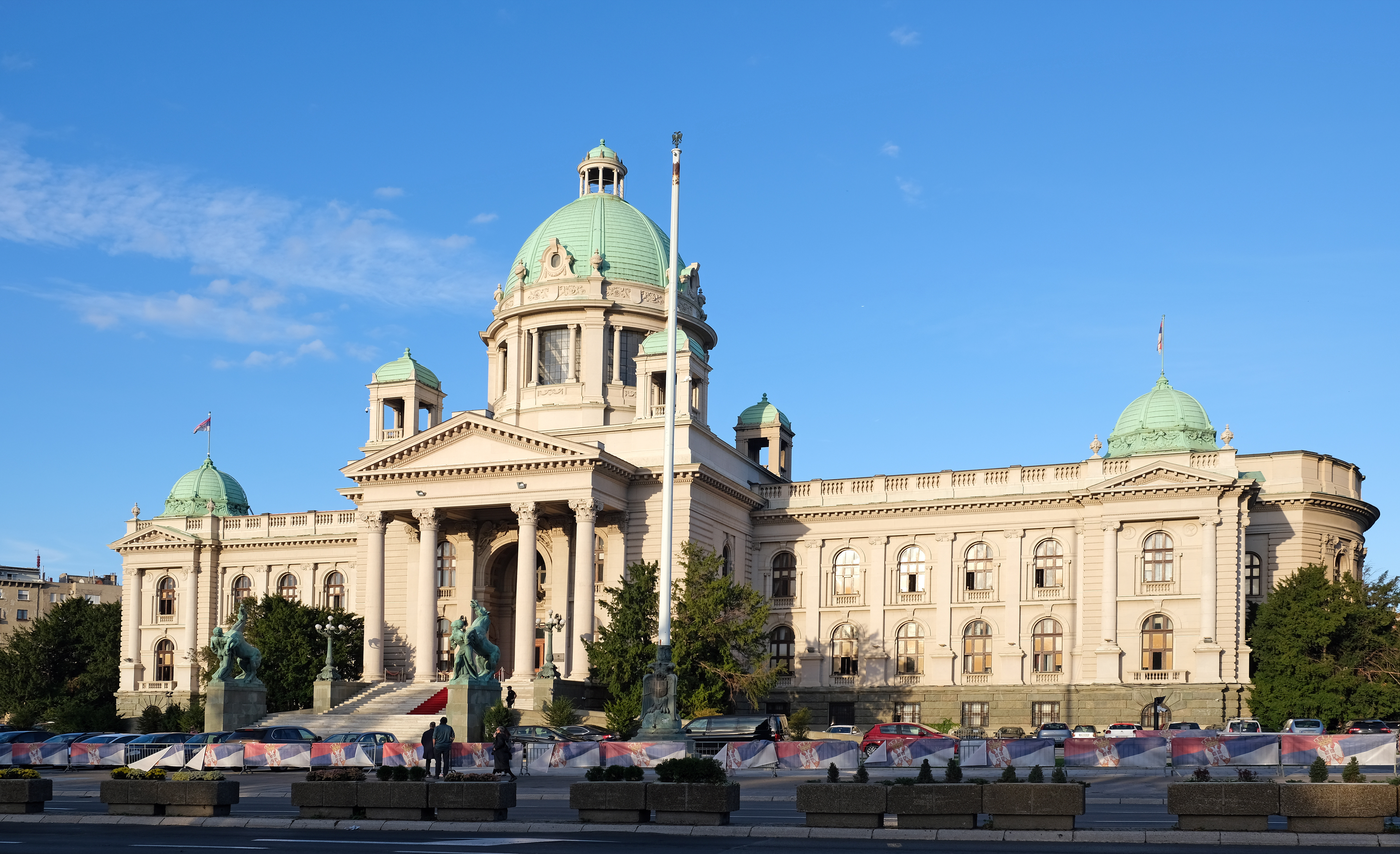
Serbia’s student-backed movement has won. Now comes the harder task of governing.
Voters have rejected Aleksandar Vučić’s political bloc after years of protests. But the parliamentary victory still leaves a prime minister to be chosen, a government to be formed and another election ahead.
By The Waterloo Journal News Desk | October 26, 2026
Serbia’s student-backed opposition has delivered a decisive defeat to the political movement that has dominated the country for more than a decade, opening the way for a change of government.
Preliminary figures published Monday put the Student List at 52.65 per cent, compared with 39.22 per cent for the “Aleksandar Vučić — United Serbia” list. Vučić conceded defeat Sunday night, setting off celebrations after an election shaped by nearly two years of student-led protests. Serbian government’s results update, Associated Press
The result is a major political break. It does not, however, mean that a new government has already taken office—or that voters directly elected a replacement president.
Understanding that distinction helps explain what happens next.
What did Serbia actually vote for?
Sunday’s election chose the 250 members of Serbia’s National Assembly, its national parliament.
Unlike Canadian federal elections, where voters elect an MP in an individual riding, Serbia treats the country as one nationwide electoral district. Voters choose a candidate list submitted by a party, coalition or citizens’ group. Seats are then distributed broadly in proportion to the votes those lists receive.
Most lists must obtain at least three per cent of the vote to qualify for seats. Recognized national-minority lists are exempt from that threshold. Candidates enter parliament according to their position on their list. Serbian National Assembly’s electoral-system guide, International IDEA
The important number for forming a government is 126 seats: a majority of the Assembly.
Election observer CRTA projected 138 seats for the Student List, comfortably above that requirement. That remains a projection rather than a final allocation, but it indicates that the movement could govern without needing another party to supply a majority. CRTA’s preliminary assessment
Why did the students become such a powerful force?
The movement grew out of anger following the collapse of a concrete canopy at the renovated Novi Sad railway station in November 2024. Sixteen people died.
The disaster prompted allegations that corruption and negligence had compromised construction. Student demonstrations developed into a wider challenge to the government’s accountability and the concentration of political power around Vučić. Associated Press
The Student List offered a vehicle for turning that protest into parliamentary representation.
Its name describes the movement behind it, rather than a proposed government composed entirely of university students. Prominent figures include Ilija Srdanović, a cardiologist and university professor who headed the candidate list, and Dejan Šoškić, a former central bank governor.
As of October 26, the movement had not settled publicly on a prime minister. Srdanović’s position at the top of the ballot does not automatically give him that job. Radio Free Europe/Radio Liberty’s guide to the movement
Nor does the opposition’s victory establish that the election was conducted on equal terms. CRTA’s preliminary assessment described severely unequal competition and restrictions on electoral participation, while pointing to exceptionally high turnout as central to the result. A government can lose an election despite an unfair political environment. CRTA
Where does Vučić fit into the system?
Serbia has both a president and a prime minister.
The president represents the state and has constitutional responsibilities including proposing a prime-ministerial candidate after consultations. The prime minister leads the government, which directs policy and answers to parliament.
Vučić resigned the presidency in September while seeking a return as prime minister. Parliamentary Speaker Ana Brnabić assumed the presidential duties temporarily. His bloc’s defeat has therefore frustrated his attempted move between the two offices. Associated Press on his resignation, Serbian government’s handover announcement
Sunday’s vote did not fill the presidency. That requires a separate election.
What happens next?
First, the results and parliamentary mandates must be finalized. The constitution requires the new Assembly’s first sitting within 30 days of the declaration of final results.
The president proposes a prime-ministerial candidate after consulting the elected lists. That candidate presents a government and programme to parliament, which must approve them with a majority of all MPs.
A new Assembly that fails to elect a government within 90 days of being constituted must be dissolved. Serbia’s constitution, Articles 101, 109 and 127
If the projected majority holds together, a Student List government is the likely immediate outcome. The uncertainty concerns its leadership, cabinet and ability to turn a broad protest alliance into an administration.
There is also another approaching contest: Serbian authorities say a presidential election must take place within three months of the vacancy created by Vučić’s resignation. The parliamentary victory does not settle that race. Presidential handover announcement
Will Serbia now move decisively toward the West?
That is possible, but it is too early to assume.
The Student List’s programme has concentrated on domestic governance, including public procurement, education, media freedom, judicial independence and health care. Its supporters are united more clearly around replacing the old governing system than around a single foreign-policy position.
European hopes for renewed cooperation therefore face an important limitation: backing democratic reform does not necessarily imply agreement on Russia, Kosovo or every condition of European Union membership. Euronews
The first practical test will be whether the winners can agree on who governs—and then demonstrate that institutions can work independently of whoever holds office. The election has given them the opportunity. The government they assemble will show how they intend to use it.