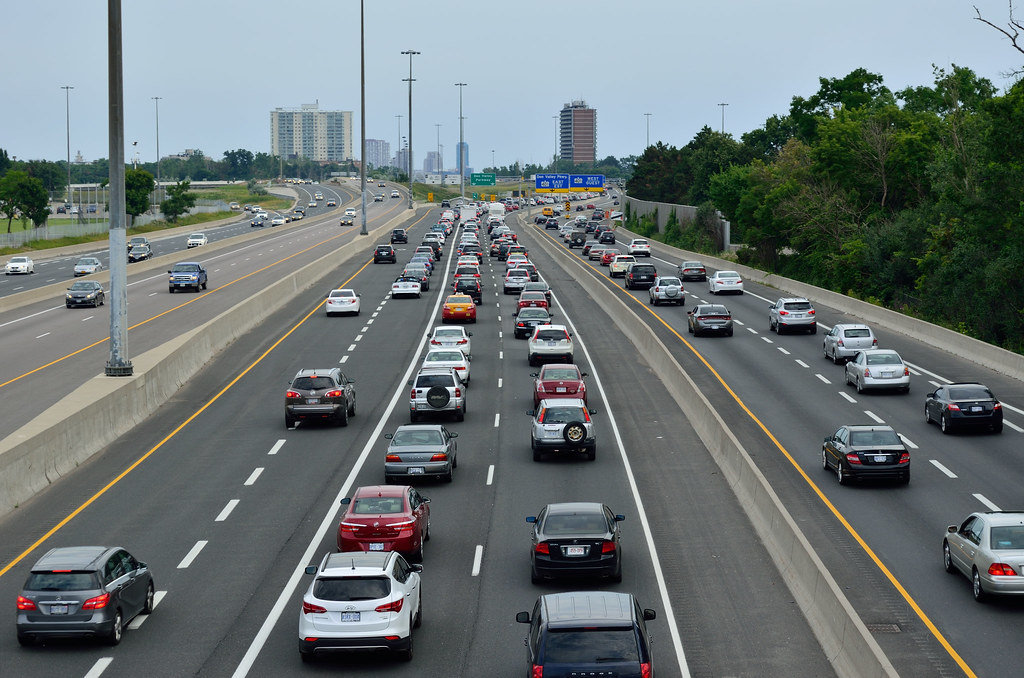
Major changes to Ontario automobile insurance are now in effect, giving drivers more control over the accident benefits they purchase but potentially leaving some crash victims with substantially less financial protection.
As of July 1, medical, rehabilitation and attendant-care benefits are the only accident benefits that must be included in every Ontario auto policy. Income replacement, caregiver benefits, non-earner benefits, death and funeral payments and several other protections have become optional.
The reforms apply to policies purchased or renewed on or after July 1, although existing coverage does not simply disappear at renewal.
Under Ontario’s revised policy language, benefits already held by an existing customer automatically continue unless the customer and insurer agree in writing to remove or change them.
That distinction has been obscured in some online discussions. Ontario has not ordered insurers to strip every existing driver’s policy down to the new minimum. It has created a less comprehensive mandatory baseline for new policies and allowed existing customers to reduce their protection in exchange for possible premium savings.
The amount saved will vary by insurer, driver and selection. Removing benefits may lower a bill, but there is no province-wide guaranteed reduction.
What changed on July 1?
Ontario’s Statutory Accident Benefits Schedule, commonly called SABS, provides certain benefits after an automobile accident regardless of who caused it.
Before July 1, a standard policy automatically included a broader group of benefits. Under the new system, only the following accident benefits remain mandatory:
- Medical benefits
- Rehabilitation benefits
- Attendant-care benefits
The remaining benefits are available as optional coverages that a policyholder can add, retain, change or decline.
Ontario’s Financial Services Regulatory Authority explains the new mandatory baseline on its standard auto-policy information page. FSRA says drivers should consult their insurer, agent or broker before changing protection.
The reform does not make automobile insurance itself optional. Ontario drivers must still carry an auto policy, including at least $200,000 in third-party liability coverage. Uninsured-automobile coverage and other mandatory components of the standard policy also continue.
Collision, comprehensive and certain vehicle-damage coverages remain separate choices, subject to the policy and any requirements imposed by a lender or leasing company.
Which benefits are now optional?
The following accident benefits are no longer required in the minimum Ontario policy:
Income replacement
Income-replacement coverage provides payments when an insured person cannot work because of accident-related injuries.
This may be particularly important for workers without employer disability insurance, people with limited sick leave, self-employed workers and households that depend heavily on one income.
Removing it may reduce the premium, but the driver should first determine whether another policy would replace lost income after a motor-vehicle accident, for how long and under what conditions.
Non-earner benefits
Non-earner coverage may provide financial support to someone who does not qualify for income-replacement or caregiver benefits and is completely unable to carry on a normal life because of an accident.
Students, unemployed people and others without conventional employment income could be affected by its removal.
Caregiver benefits
Caregiver benefits may help pay expenses when a person injured in an accident can no longer provide essential care to a child, aging parent or another dependent household member.
Lost educational expenses
This coverage can reimburse certain expenses when accident injuries prevent an insured person from continuing an education program.
Expenses of visitors
This benefit can cover certain reasonable and necessary expenses incurred by close family members who visit an injured person during treatment or recovery.
Housekeeping and home maintenance
This can help pay for services an injured person can no longer perform, subject to the policy’s eligibility requirements and limits.
Damage to personal items
This benefit may cover certain items damaged in an accident, including clothing, prescription glasses, dentures, hearing aids, prostheses and other medical or dental devices.
Death and funeral benefits
Death benefits provide payments to certain surviving relatives when a covered person dies because of an automobile accident. Funeral coverage pays some eligible funeral expenses.
FSRA provides descriptions of each benefit through its optional and extra coverage guide. The regulator cautions that these are summaries and that the policy and Statutory Accident Benefits Schedule contain the controlling legal language.
Will existing drivers automatically lose benefits?
No.
If an existing policy renews on or after July 1, the benefits held before the reform are deemed to continue as optional benefits at their previous amounts unless the policyholder agrees in writing to decline or modify them.
That protection appears directly in Ontario’s updated standard automobile policy.
A renewal document may describe several benefits as “optional,” but optional does not necessarily mean they have been removed. Existing customers should compare the new certificate with the expiring policy and confirm what is included in the quoted premium.
New customers face a different situation.
Anyone buying auto insurance for the first time or starting a new policy after July 1 must choose which optional benefits to purchase. A low quote may include only the new mandatory baseline, so consumers should not assume competing quotes provide identical protection.
The practical question is no longer simply, “Which company offered the cheapest premium?” It is also, “Which benefits are included in that price?”
Will Ontario auto insurance become cheaper?
It can become cheaper if a policyholder removes benefits, but the reform does not guarantee broad premium reductions.
Ontario’s government presented the changes as a way to provide greater choice and allow consumers to avoid paying for protection they may already have through workplace health, disability or life-insurance plans. The province completed the regulatory changes as part of its larger effort to modernize auto insurance.
The 2025 Ontario budget described the reforms as increasing consumer choice and making auto insurance responsible for motor-vehicle medical and rehabilitation costs before extended health plans.
Critics argue that “choice” can be misleading if customers focus on the immediate discount without understanding the potential value of the discarded benefits.
CityNews reported that some examples shown to consumers produced estimated savings of approximately $7 to $20 per month after multiple benefits were removed. That is not a universal estimate, and different insurers may price each option differently. Its report also found significant public confusion before the rules took effect.
A household saving $10 each month would keep $120 over a year. The tradeoff could be losing access to thousands of dollars in income, caregiver or death benefits after a serious collision.
That does not mean every optional benefit is necessary for every customer. A driver with strong employer disability insurance, private health coverage and life insurance may already have overlapping protection.
The only reliable comparison is between the actual wording, limits, exclusions and duration of those plans—not their names.
Auto insurance now pays first for treatment
Another important reform changes which plan pays certain accident-related health costs first.
Beginning July 1, Ontario auto insurance generally pays first for medical and rehabilitation benefits arising from a motor-vehicle accident, except for medication expenses. Workplace or private health plans previously had priority in many situations.
The Insurance Bureau of Canada says this ordering is intended to preserve private health benefits for other needs. Its Ontario reform guide explains the new payment priority and the treatment of existing policies.
Drivers should not interpret “auto insurance pays first” as meaning every treatment is automatically approved. Claims remain subject to definitions, medical evidence, benefit limits, treatment frameworks and disputes over whether an expense is reasonable and necessary.
The change most passengers may not know about
The reforms also narrow who receives the newly optional benefits.
Optional accident benefits purchased on an auto policy now apply only to:
- The named policyholder
- The policyholder’s spouse
- Dependants of the policyholder or spouse
- People specifically listed in the policy as drivers
This means an unrelated passenger is not automatically entitled to the host driver’s optional income-replacement, non-earner or death benefits merely because the driver purchased them.
Mandatory medical, rehabilitation and attendant-care benefits remain available to passengers under the applicable priority rules. The gap concerns benefits that have moved into the optional category.
For example, a friend riding in an insured vehicle may receive mandatory treatment benefits after a crash but may not have access to that vehicle owner’s optional income-replacement coverage. The passenger’s eligibility would depend on whether the person has access through their own policy, a spouse or another qualifying relationship.
The Insurance Bureau’s consumer guidance confirms that passengers outside the defined insured group will not receive optional benefits from the vehicle’s policy, even if its owner paid for them.
That change shifts the system away from broad accident-based coverage and toward protection connected to an individual or household’s own auto policy.
What happens to pedestrians and cyclists?
Pedestrians and cyclists remain eligible for mandatory medical, rehabilitation and attendant-care benefits when injured in an automobile accident.
However, they cannot access the newly optional benefits unless they qualify through an auto policy as a named insured, spouse, dependant or listed driver.
Someone who does not own a car, is not listed on another policy and is not a covered spouse or dependant has no ordinary way to purchase those auto-policy options independently.
Before the reform, an uninsured pedestrian or cyclist could seek the then-mandatory benefits through the applicable auto-insurance priority system. After July 1, that person may have mandatory treatment coverage but no no-fault income replacement, non-earner, caregiver, death or funeral benefit from the striking vehicle’s policy.
This is one of the reform’s most significant changes because it affects people who never had a genuine opportunity to “choose” whether to buy the optional coverage.
The Insurance Bureau’s explanation confirms that uninsured pedestrians and cyclists continue to receive mandatory benefits but generally cannot obtain the new optional benefits unless they qualify through their own household coverage.
Injured people may still have legal claims against an at-fault driver, but a lawsuit is not equivalent to immediate no-fault benefits. Liability must be established, statutory thresholds and deductibles may apply, and resolution can take considerably longer.
Personal-injury lawyers predict the new gaps could produce more lawsuits as injured people seek compensation unavailable through accident benefits. That is a forecast from lawyers who represent claimants—not a demonstrated outcome yet. CityNews examined the possibility of increased litigation.
Should drivers raise their liability limits?
The reforms do not automatically increase the statutory minimum for third-party liability, which remains $200,000.
In practice, many Ontario drivers already purchase $1 million or $2 million.
Brokers have begun warning that narrowing accident benefits could increase the importance of liability coverage. If an injured person cannot recover certain losses through no-fault benefits, more of the financial dispute may move toward a claim against the at-fault driver.
That does not mean every collision will result in a larger lawsuit or that all drivers require the same limit. It does mean customers should review liability coverage as part of the same conversation rather than treating the accident-benefit decision in isolation.
Canadian Underwriter reported that some customers were increasing liability limits after brokers identified the potential exposure involving passengers, cyclists and pedestrians. Its report describes the emerging concern.
What remains mandatory?
The reforms do not eliminate Ontario’s no-fault accident-benefit system.
Every standard policy still includes medical, rehabilitation and attendant-care benefits. Those can help pay for services such as treatment, therapy, rehabilitation and assistance with personal care, subject to the claimant’s injury classification and policy limits.
Third-party liability and uninsured-automobile coverage also remain mandatory components of Ontario auto insurance.
Direct Compensation–Property Damage coverage remains part of the standard policy, although Ontario has separately allowed drivers since 2024 to decline compensation under that section. That earlier change concerns damage to the vehicle and is not the same as the July 2026 accident-benefit reform.
What if a claim was already open?
The new rules do not retroactively change an existing accident claim.
Coverage is determined by the policy in force when the accident occurred. Someone injured before July 1 does not lose benefits simply because a policy later renews under the new framework.
Likewise, adding an optional benefit after a collision will not make it available for that earlier event. Only the coverage in effect on the accident date applies.
What drivers should examine before changing coverage
Before accepting a lower-premium option, customers should obtain answers to several concrete questions:
1. What is included in the quote? Ask for a written list of mandatory and optional benefits, their limits and their prices.
2. What did the previous policy contain? Compare the new certificate with the expiring policy. Do not rely solely on the total premium.
3. Would another plan replace lost income? Review employer disability insurance, sick leave and private disability coverage. Confirm the waiting period, percentage of income, maximum payment and duration.
4. Who in the household is protected? Check whether a spouse, student, dependent child or occasional driver is properly identified.
5. Who depends on the policyholder’s unpaid work? Caregiver and housekeeping benefits may matter even when the insured person does not earn conventional employment income.
6. Is life insurance an adequate substitute? Compare beneficiaries, exclusions and payment amounts before removing auto death or funeral coverage.
7. Is the liability limit still appropriate? Ask what it would cost to increase protection from $1 million to $2 million or another available amount.
8. How much is actually being saved? Request the premium with and without each benefit. The value of a decision is difficult to judge when all options are bundled into one total.
Choice—and more responsibility
The Ford government’s reform gives Ontario drivers greater ability to customize auto insurance. It can reduce unnecessary duplication for people who already have strong workplace, disability, health and life-insurance coverage.
It also moves more responsibility onto consumers in one of the most complex retail financial products they purchase.
A driver can now lower a premium by removing protection that may not be missed until a serious collision prevents someone from working, studying, maintaining a home or caring for a dependant.
For existing customers, the safest starting point is understanding that current benefits continue unless changed in writing. There is no requirement to discard them.
For new customers, the lowest quote may also be the thinnest policy.
Ontario’s auto-insurance reform offers more choice. Whether it produces better value will depend on how clearly insurers explain that choice—and whether drivers understand the losses they are agreeing to carry themselves.