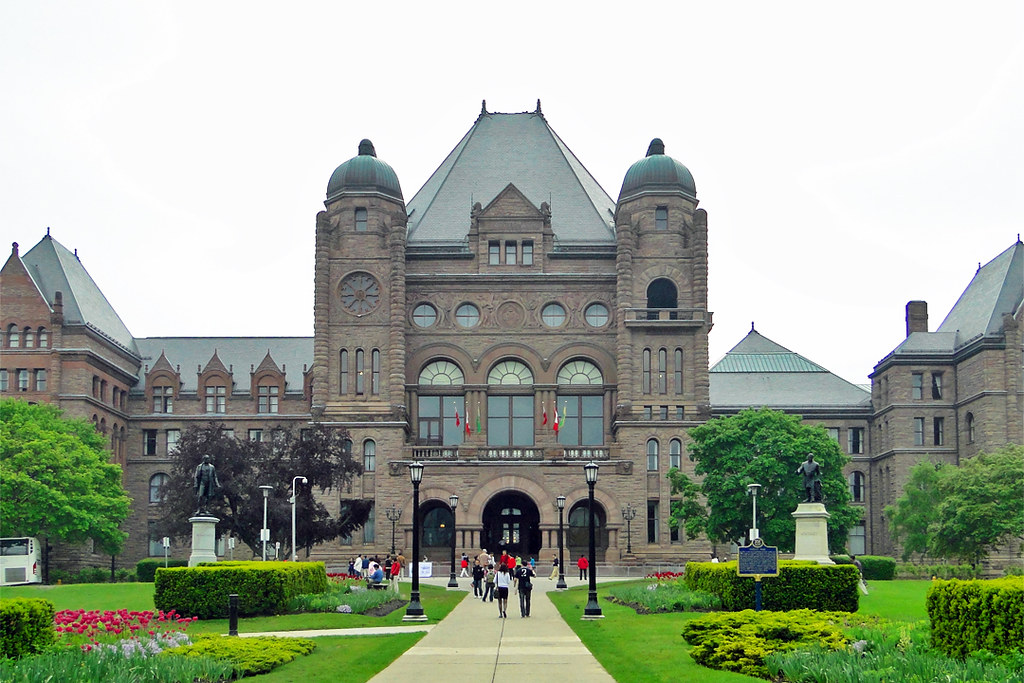
Premier Doug Ford has called three Ontario provincial by-elections for Sept. 3, creating an unusual one-day test of the governing Progressive Conservatives in three distinctly different communities.
Scarborough Southwest is an urban Toronto riding left vacant by former NDP deputy leader Doly Begum. York–Simcoe is a longtime Conservative stronghold previously represented by cabinet minister Caroline Mulroney. Hamilton East–Stoney Creek is a potentially competitive industrial and suburban seat vacated by former PC cabinet minister Neil Lumsden.
Advanced voting will run from Aug. 26 to 28, according to the announced election schedule. CityNews reported the writs and initial candidate roster Wednesday.
The elections will not put Ford’s majority at risk. The PCs won 82 of the legislature’s 124 seats in the February 2025 general election, comfortably above the 63 required for a majority. Even if the governing party lost all three by-elections, it would retain control of Queen’s Park.
That does not make the results meaningless. With Ford’s personal approval falling and recent polls offering sharply different pictures of the provincial race, the three contests could show whether dissatisfaction with the premier is translating into actual votes—and which opposition party is benefiting.
What Ontario’s provincial polls are saying
The most recent publicly reported Liaison Strategies survey presents a far less comfortable picture for the PCs than the one that existed after the 2025 election.
The poll, conducted July 20 and 21, placed the Ontario Liberals at 38 per cent among decided and leaning voters, followed by the PCs at 33 per cent and the NDP at 24 per cent. Ford’s personal approval stood at 24 per cent, while 72 per cent disapproved of his performance. Only 26 per cent said Ontario was moving in the right direction. Liaison surveyed 1,000 Ontarians using interactive voice response technology and weighted the results to census targets. CityNews published the poll’s findings and methodology.
That represents a major change from an Ipsos poll conducted March 10 and 11. Ipsos placed the PCs at 42 per cent, the Liberals at 35, the NDP at 18 and the Greens and other parties at seven. Even then, however, 60 per cent said it was time for another party to govern, while 40 per cent believed the Ford government deserved re-election. The Ipsos survey included 801 Ontario adults and carried a credibility interval of plus or minus 4.2 percentage points.
The gap between those surveys is a warning against treating a single poll as a settled verdict. Other 2026 polling has also produced materially different party standings. Ontario is not in a general election campaign, many voters are paying limited attention, and the Liberals are operating under interim leader John Fraser while preparing to choose a permanent leader.
There is nevertheless a consistent warning for Ford in the government’s weak approval and “wrong direction” numbers. The unresolved question is whether unhappy voters will unite behind one alternative, divide between the Liberals and NDP, or simply stay home.
The by-elections may provide the first practical evidence.
Scarborough Southwest: The only riding with a public local poll
Scarborough Southwest has the clearest riding-level polling—but the survey is now several months old and predates the selection of the current candidates.
A Mainstreet Research poll released March 3 found the Ontario Liberals leading provincially in the riding with 43 per cent, followed by the PCs at 29 per cent and the NDP at 19 per cent. Twenty-two per cent of respondents were undecided. The survey questioned 464 riding residents and used the current provincial boundaries. Mainstreet described a Liberal victory as likely but “not assured”.
That result was striking because the NDP won the seat in both 2018 and 2022 and retained it in 2025. Begum received approximately 43 per cent of the vote in the last provincial election.
But the poll was conducted amid intense attention surrounding Begum’s departure from the provincial NDP to run federally for the Liberals. She subsequently won the federal Scarborough Southwest by-election. It is possible that some of the provincial Liberal support recorded by Mainstreet reflected Begum’s personal appeal or confusion between the simultaneous federal and provincial political stories.
The Liberal candidate is Ahsanul Hafiz, a businessman who owns a large group of Domino’s Pizza franchises. Hafiz secured the nomination by just 19 votes over former federal cabinet minister and prospective Liberal leadership contender Nate Erskine-Smith.
The NDP has nominated Fatima Shaban, a community advocate who also ran against Begum in the April federal by-election. Her federal result—about six per cent—should not automatically be transferred to the provincial contest. Provincial New Democrats have a much stronger organization and history in this riding than their federal counterparts.
The PC candidate is Dr. Noor Tarun, a family physician and business owner who operates several medical clinics and a specialist centre in the Greater Toronto Area. The PC party says Tarun has lived in Scarborough for more than 20 years.
Mark Bekkering, a former municipal public servant who also ran in 2025, is representing the Greens. The Green Party says Bekkering spent more than 30 years working in public service and community development.
A Liberal victory would be more than a pickup. It would show that the party can convert favourable Toronto polling into an actual seat, even without Begum or Erskine-Smith on the ballot. It could also strengthen the Liberals’ argument that they—not the NDP—are becoming the main destination for voters seeking to defeat Ford.
An NDP victory would carry the opposite message. It would demonstrate that Begum’s departure did not take the riding’s provincial NDP coalition with her and would reinforce Marit Stiles’ claim that her party remains the strongest progressive organization in many urban ridings.
A PC victory would be a genuine upset based on the seat’s recent history. It would suggest that a split between Liberal and NDP voters can still deliver urban seats to Ford’s party, even when the PCs are not close to majority support locally.
York–Simcoe: How safe is a safe PC seat?
York–Simcoe is the election’s clearest defensive test for the government.
Mulroney won the riding with 59.4 per cent of the vote in 2025, finishing more than 35 percentage points ahead of the Liberals. The seat combines rapidly growing communities with rural and exurban areas and has consistently favoured provincial Conservatives.
The PC candidate is Susan Lahey, an East Gwillimbury councillor, entrepreneur and community volunteer. Ford appointed her as the party’s candidate in June. According to the PC announcement, Lahey has worked on local infrastructure, community services and growth issues while serving on council.
The Liberals have selected Naomi Davison, a York regional councillor from Georgina. Her municipal experience gives the party a locally established candidate in a riding where infrastructure, development, traffic and Lake Simcoe protection are recurring concerns.
Not every major party had publicly finalized its candidate when the by-election was called. Elections Ontario’s final certified list will therefore be more authoritative than early media lists once nominations close.
No reputable public riding poll for York–Simcoe was located as of Aug. 5. Province-wide or regional polling cannot simply be applied to the riding. Online electoral projections are models derived partly from broader polling; they are not surveys of York–Simcoe voters.
The PCs should begin as clear favourites based on the 2025 result. A normal PC hold—particularly with a reduced margin—would offer limited evidence about the province as a whole. Governments often lose support in by-elections without suffering the same decline in a general campaign.
An unexpectedly close contest, however, would indicate that Ford’s problems are reaching beyond central Toronto and into the outer-ring communities that have been central to his electoral coalition.
A PC loss would be the most consequential possible result of the night. If a 59-per-cent Conservative seat can fall while the party remains in government, numerous other GTA and exurban PC ridings would immediately appear more competitive.
Hamilton East–Stoney Creek: The most revealing three-way race
Hamilton East–Stoney Creek may be the most politically informative of the three elections because all three major parties can make a plausible case for competing there.
Lumsden won the riding for the PCs in 2025 with 42.1 per cent of the vote. Liberal Heino Doessing finished second with 29.9 per cent, while NDP candidate Zaigham Butt received 17.6 per cent. Elections Ontario publishes the riding’s official tabulation.
Those figures, however, conceal a complicated history. The NDP held the riding continuously from its creation in 2007 until Lumsden won it in 2022. In that election, former NDP MPP Paul Miller ran as an independent after being removed from the party’s caucus, splitting a substantial portion of the opposition vote. The PCs then expanded their support in 2025 as the Liberals climbed into second place and the NDP fell to third.
The PC candidate is Jeff Beattie, a first-term Hamilton city councillor representing Ward 10. Beattie withdrew from the 2026 municipal contest after accepting the provincial nomination, meaning he cannot simply return to his council campaign if he loses. The Public Record reported that decision and his move into provincial politics.
The Liberals are again running Doessing, giving them a candidate with recent campaign experience and an existing local organization. Pascale Marchand, another returning 2025 candidate, will represent the Greens.
The NDP had not formally announced its candidate when the writ was issued. Its eventual choice will be important: the party possesses deep roots in east Hamilton, but its 2025 result suggests those roots can no longer be taken for granted.
No current public riding poll was located for Hamilton East–Stoney Creek. That makes claims that any party is already “winning” the seat speculative.
A PC hold would show that the party remains competitive in working-class urban territory despite Ford’s province-wide difficulties. It would also suggest the PCs can benefit from continued Liberal-NDP competition.
A Liberal win would validate the party’s steady growth in the riding and provide evidence that its provincial polling gains extend outside Toronto. Because the Liberals currently hold only a small Queen’s Park caucus, every pickup also helps them rebuild the organizational infrastructure needed for the next general election.
An NDP victory would be equally significant. It would represent a recovery in a former stronghold and demonstrate that the party can recapture voters after its severe 2025 decline in the riding. If the NDP cannot compete here, questions will grow about its ability to defend or reclaim similar working-class seats.
What the three possible results would mean
A PC sweep would allow Ford to argue that weak approval ratings and government controversies have not broken the party’s electoral coalition. It would be particularly damaging for the opposition if the PCs captured Scarborough Southwest while retaining the other two seats.
A split result—PCs holding York–Simcoe and Hamilton East–Stoney Creek while the NDP or Liberals win Scarborough Southwest—would largely preserve the existing political map. It would show urban resistance to Ford without establishing that the government’s suburban and exurban base is collapsing.
A Liberal gain in Scarborough Southwest or Hamilton would strengthen the party’s claim to be the emerging principal alternative to the PCs. Winning both would profoundly alter the opposition contest and place heavier pressure on the NDP.
An NDP win in Scarborough Southwest combined with a strong Hamilton performance would show that Stiles’ party remains capable of defending its urban base despite improved Liberal polling. Capturing Hamilton East–Stoney Creek would be a major recovery.
A PC loss in York–Simcoe would be the clearest danger signal for Ford. Unlike the other two ridings, it cannot easily be explained as unfavourable territory or the return of an opposition stronghold.
A test, but not a miniature general election
By-elections frequently produce lower turnout, stronger protest voting and greater emphasis on individual candidates. The three parties will also concentrate resources in these seats at levels that could not be replicated across 124 ridings during a general election.
The results should therefore be read as signals, not as a province-wide forecast.
Scarborough Southwest will test whether the Liberals can capitalize on vote splitting and Begum’s political realignment. York–Simcoe will measure the durability of the PC heartland. Hamilton East–Stoney Creek will reveal which party is best positioned to assemble an anti-government vote in a genuinely competitive urban seat.
Ford’s majority will survive every possible outcome on Sept. 3. What may not survive unchanged is the political assumption that produced it.