TORONTO — Ontario’s wildfire response has become the subject of a deceptively simple political argument.
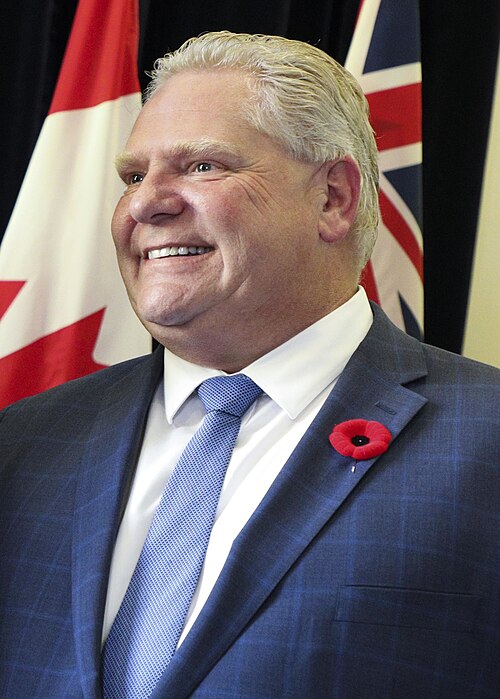
Critics say Premier Doug Ford’s government cut wildfire funding as fires threatened northern communities, destroyed buildings and forced evacuations. The government says it has increased base funding, hired permanent employees and will spend whatever is necessary to protect the province.
Both claims contain elements of truth. Neither, by itself, adequately describes what Ontario is doing.
The province’s 2026 budget allocates $150 million for emergency forest firefighting in the 2026-27 fiscal year. That is $121 million less than the $271 million Ontario now expects to have spent in 2025-26—a decline of about 45 per cent.
Measured that way, the budget was cut sharply.
But the $271-million figure was not the amount Ontario originally expected to spend. The province initially budgeted $135 million for emergency forest firefighting in 2025-26, then added money as the season worsened. A $90-million increase announced in the fall brought the forecast to $225 million, and the estimated final cost later climbed to $271 million.
Compared with the original $135-million allocation, this year’s $150-million provision is actually $15 million higher.
That is the central fact missing from much of the online debate: Ontario is comparing a new season’s starting allocation with the final, emergency-inflated cost of an unusually severe previous season.
It is therefore accurate to say the government reduced the wildfire line from last year’s spending level. It is also accurate to say Ontario increased it from last year’s original budget. The figures appear contradictory only because they measure different things.
A budget designed to be exceeded
Ontario treats emergency forest firefighting partly as a contingency expense. The amount in the spring budget is not a hard ceiling beyond which waterbombers must be grounded or firefighters sent home.
When fire activity exceeds expectations, the province can draw money from central contingency funds and seek supplementary appropriations. That happened in 2025, when Ontario added $90 million for suppression costs after the area burned increased substantially.
The 2026 Ontario budget records emergency forest firefighting costs of $203 million in 2023-24, $171 million in 2024-25 and an estimated $271 million in 2025-26. The new $150-million figure is the plan for 2026-27, not a promise to stop spending when the account reaches that amount.
Final 2025-26 spending will not be confirmed until Ontario releases its public accounts by late September.
There are reasonable accounting grounds for keeping an emergency allocation below the cost of a bad fire year. Wildfire costs can swing dramatically depending on lightning, rainfall, drought, wind, the location of fires and whether communities or infrastructure are threatened. Automatically budgeting for the worst season every year could leave large amounts unused.
But there is a weakness in that approach.
A contingency system may ensure that invoices are eventually paid, but it does not necessarily ensure that enough experienced firefighters, aircraft engineers, dispatchers and incident managers are recruited, trained and retained before the smoke appears.
Money added in August cannot retroactively create an experienced crew in April.
The most useful question, therefore, is not simply whether Ontario will pay to fight fires. It is whether the province entered the season with sufficient capacity to attack them early, when they are smaller and less expensive.
Where the “67-per-cent cut” originated
A second figure frequently circulating online alleges that the Ford government cut wildfire funding by 67 per cent.
That claim traces back to the government’s first full budget in 2019.
Ontario’s 2019 budget showed that emergency forest firefighting was expected to cost $212 million in 2018-19, following a severe season. The government then budgeted $69.8 million for 2019-20—a year-over-year reduction of approximately 67 per cent.
The arithmetic is correct. The implication that Ontario permanently removed two-thirds of its entire firefighting capacity is not.
Once again, the comparison placed the estimated final cost of a difficult season beside the opening allocation for the next one. By the 2019 fall economic statement, the province had increased that year’s forecast to almost $130 million.
The 67-per-cent figure describes a real reduction on a budget table. It does not demonstrate that Ontario refused to fund emergency suppression, nor does it measure staffing, aircraft availability or the total cost ultimately incurred.
That does not make the criticism meaningless. Repeatedly publishing optimistic starting figures and then relying on emergency top-ups can make the program appear less expensive than experience suggests. It also makes it difficult for the public to determine how much of the money is maintaining permanent readiness and how much is paying the extraordinary costs of fires already burning.
Ontario itself distinguishes these categories. In March, the government said annual base funding used to keep crews and aircraft ready had increased by 93 per cent since 2018, reaching more than $65 million. That is separate from the larger emergency forest firefighting line.
What Ontario has added
Natural Resources Minister Mike Harris—son of, and not to be confused with, former premier Mike Harris—has evidence he can cite in defence of the government’s record.
Ontario says it added 68 permanent positions before the 2026 season, after filling 100 permanent positions during 2024 and 2025. It has reclassified wildland firefighter positions and increased compensation for firefighters, pilots and aircraft maintenance engineers.
The province has committed more than $500 million to purchase six new Canadian-made DHC-515 waterbombers. It operates a fleet of 28 specialized aircraft and a network that includes 14 fire-management headquarters, 11 forward attack bases, regional fire centres, hangars and logistics facilities.
Ontario and Ottawa also invested $64 million in upgraded equipment, suppression tools and training in 2024. The province’s 2026 readiness announcement said all necessary resources were in place.
Those are significant measures. They are incompatible with the broadest version of the allegation that Ontario has simply dismantled its wildfire program.
But new aircraft ordered now do not necessarily increase today’s aerial capacity; specialized waterbombers take years to manufacture and deliver. Permanent positions also matter only if they produce sufficient deployable crews, supervisors and technical personnel in the places they are needed.
That is where Harris’s record becomes more difficult to defend.
A major staffing dispute
The Ontario Public Service Employees Union, which represents provincial wildfire personnel, says approximately 153 initial-attack crews are available this season. It argues that Ontario needs at least 250 to meet the demands of longer and more severe fire seasons.
That is the union’s assessment, not an independently established minimum. Ontario has not publicly adopted the 250-crew figure.
But the gap is too large to dismiss without a detailed government response. Saying that hundreds of people work in the system does not reveal how many complete crews are available on a given day, how many positions are vacant, how experienced those crews are or how many cannot be deployed because pilots, engineers or supervisors are unavailable.
As of July 16, the union said Ontario had recorded 483 fires in 2026, compared with 351 at the same point last year and a 10-year average of 320. It accused the government of failing to expand staffing as quickly as the fire environment has changed. Those figures were attributed to the province’s fire-information system, although the union’s conclusions about the required staffing level remain its own.
The government’s most persuasive answer would be to publish standardized readiness data: authorized and filled positions, deployable crews, vacancies, experience levels, aircraft serviceability, response times and the number of fires that could not receive an immediate attack because resources were committed elsewhere.
It has not provided that complete picture.
What the auditor found
Concerns about wildfire readiness predate the current emergency.
Ontario’s auditor general examined 3,873 fires requiring a provincial response between 2017 and 2021. In 15 per cent of those cases, it took the ministry more than four hours to dispatch crews—beyond the ministry’s required response time.
The audit also found that only 15 of 144 northern municipalities had wildfire-protection plans. In districts rated at extreme or very high fire risk, 63 per cent had no communities with such plans. The ministry had completed after-action reports for only two of 22 significant fires, limiting its ability to systematically learn from major incidents.
The 2022 audit did not conclude that every delayed dispatch resulted from a budget cut. Distance, weather, competing incidents and aircraft availability can all affect response times. It did, however, document weaknesses in preparation, measurement and institutional learning.
Those findings provide a more meaningful test of ministerial performance than any single spending total.
Collins and Whitesand put assurances under pressure
Harris’s declaration in March that Ontario had “all the necessary resources in place” is now being judged against events on the ground.
A fast-moving fire caused extensive destruction at Namaygoosisagagun First Nation, also known as Collins First Nation, more than 200 kilometres north of Thunder Bay. Leaders at Collins and Whitesand First Nation have criticized the assistance and communication they received during evacuations.
A Whitesand emergency-response manager said the community ordered its own evacuation after being told by the province that the fire did not pose a threat. Collins residents also fled without the provincial help community leaders believed they needed.
Harris said the fire threatening Collins ignited close to the community and advanced at roughly four kilometres per hour, leaving only a short period in which to mobilize crews. Extreme fire behaviour can overwhelm even a well-funded response, and the destruction at Collins does not, by itself, prove that a missing crew or budget decision caused the loss.
Nevertheless, when a government claims complete readiness and communities report having to organize their own escape, the burden falls on the government to provide a precise timeline.
Ontario should disclose when the fire was detected, when its threat to the community was identified, when local leaders were warned, what resources were requested, what resources were dispatched and why provincial evacuation assistance was not available sooner.
Without that evidence, the government’s assurances remain difficult to independently assess.
Is Mike Harris doing a good job?
There is no factual way to reduce ministerial performance to a simple yes or no. The evidence supports a more qualified conclusion.
Under Harris, Ontario has created permanent positions, improved compensation, invested jointly in new equipment and committed to replacing part of its aging aerial fleet. Base readiness funding is substantially higher than it was in 2018. Those are material improvements.
At the same time, Harris has not publicly reconciled the union’s claim of a nearly 100-crew shortfall with his own assertion that every necessary resource was in place. The government continues to depend on emergency financial top-ups, while its public accounting makes it difficult to distinguish durable capacity from the cost of responding after fires escape.
Most seriously, accounts from northern First Nations raise questions about threat assessment, communication and evacuation support—the functions against which readiness must ultimately be measured.
The available evidence does not support the claim that Harris has starved the system of all necessary funding. Nor does it justify an unqualified conclusion that the system is performing well.
A fairer verdict is that Ontario has made significant investments, but Harris has yet to demonstrate—with operational data and transparent incident reviews—that those investments have produced a response equal to the province’s changing risk.
What is Ottawa responsible for?
Wildland firefighting is primarily a provincial and territorial responsibility. Local authorities respond first, followed by the province. Ontario manages fires on provincial Crown land, deploys its crews and aircraft, and decides how to allocate them.
Ottawa does not ordinarily command Ontario’s fire lines.
The federal government’s role grows when an emergency exceeds provincial capacity. Ontario can submit a formal request for federal assistance, after which the federal Government Operations Centre coordinates available departments and resources. The Canadian Armed Forces may assist with transportation, evacuations, logistics or other emergency functions, although soldiers are not a substitute for a permanent provincial wildfire service.
Resources also move through the Canadian Interagency Forest Fire Centre, which coordinates assistance among provinces, territories and international partners. During the current emergency, personnel and aircraft from Alberta were deployed to Ontario, while federally funded helicopters were made available.
Ottawa has committed $256 million nationally over five years to help provinces and territories purchase specialized equipment and $28 million to train additional firefighters. A broader federal program has supported equipment, community training, FireSmart measures and wildfire science. The federal government announced in February that equipment agreements with eligible provinces and territories represented commitments totalling $254.3 million.
These investments strengthen provincial systems; they do not transfer operational responsibility to Ottawa. The federal government’s 2026 preparedness plan explicitly says emergencies are managed first locally, then provincially or territorially, with federal help available on request.
First Nations expose a jurisdictional fault line
The division of responsibility becomes less clear—and more consequential—when First Nations are threatened.
Chiefs and councils lead emergency responses in their communities. Indigenous Services Canada says it reimburses 100 per cent of eligible response and recovery expenses through its Emergency Management Assistance Program. In practice, federal authorities frequently rely on provinces, municipalities and contractors to deliver services.
This creates a dangerous accountability problem. A First Nation can be located within Ontario, rely on provincial fire intelligence and suppression resources, and require federally funded evacuation and recovery support. When something fails, each government can point to another part of the chain.
The controversy following the destruction at Collins First Nation illustrates why financial reimbursement is not the same as operational capacity. A promise to cover eligible costs after an evacuation does not guarantee that aircraft, accommodations, emergency coordinators or clear decisions will be available when the fire arrives.
Ottawa therefore has a direct responsibility—not for commanding every Ontario fire crew, but for ensuring First Nations receive emergency protection equivalent to that available elsewhere.
Should Canada have a larger federal role?
A national takeover of wildfire suppression would likely create another layer of administration while weakening the regional expertise already held by provincial agencies. Ontario crews understand Ontario’s forests, aircraft network and operating geography. Day-to-day command should remain close to the incident.
But the case for a stronger federal capacity is growing.
Fire seasons increasingly overlap across several provinces, reducing the pool of spare crews and aircraft that Canada’s mutual-aid model depends upon. A province cannot send substantial help elsewhere when its own communities are threatened. International resources may also be scarce when Canada and the western United States experience severe conditions simultaneously.
Ottawa is best positioned to fund and coordinate assets that cross borders: satellite detection, national fire-weather modelling, common equipment procurement, portable evacuation capacity, Indigenous-led fire crews, training standards, public-health monitoring and a strategic reserve of personnel and aircraft support.
Canada is already moving partly in that direction. Natural Resources Canada says climate change is increasing the frequency, intensity and severity of wildland fires, while annual national suppression costs exceed $1 billion. Its wildfire capacity program has funded provincial equipment and community-based training.
The policy choice is not between complete provincial control and a federal takeover. A more credible model would leave incident command with provinces while establishing stronger national surge capacity and enforceable service agreements for First Nations.
The question Ontario still must answer
The viral claim that Ontario “cut the wildfire budget” is technically defensible only when this year’s $150-million plan is compared with last year’s final estimated spending of $271 million.
It becomes misleading when presented as proof that Ontario removed 45 per cent of its firefighters, aircraft or operational capacity. The budget line does not work that way, and the government can—and almost certainly will—spend more if the season requires it.
But the government’s rebuttal is also incomplete.
Promising unlimited emergency spending does not answer whether Ontario had enough trained people in place before the season began. Announcing permanent positions does not establish how many attack crews can actually be deployed. Buying future aircraft does not resolve present-day shortages. And citing aggregate spending does not explain why First Nations say they were left to manage evacuations themselves.
The deeper problem is not a government unwilling to pay the final wildfire bill. It is a system that reveals its true cost only after the emergency, publishes too little operational data before it and divides responsibility among governments when northern and Indigenous communities need a clear answer.
Ontario did not simply cut wildfire protection in half.
What it did was budget far less than it spent last year, while asking the public to trust that additional money and resources will appear when required. In an era of longer, hotter and more destructive fire seasons, that trust must be supported by more than assurances.
It requires measurable readiness, transparent incident timelines and accountability that does not disappear into the smoke.