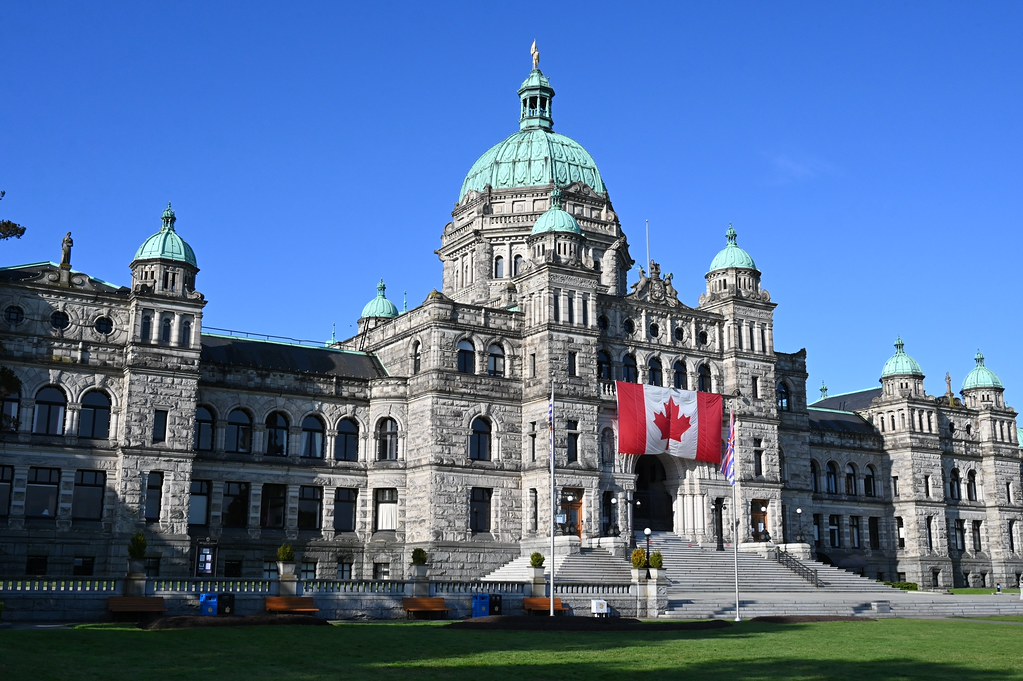
British Columbia’s Conservatives are projected to form a majority government following the October 24 provincial election, ending nine years of NDP rule and putting Lorne Doerkson on course to become premier.
The Canadian Press called a Conservative majority on election night. David Eby subsequently announced his resignation as NDP leader, bringing a swift political reckoning for a premier who called voters to the polls two years ahead of schedule. Election-night results remain preliminary, according to Elections BC. The Canadian Press, Elections BC
The result represents a striking reversal. Eby entered the campaign facing a divided opposition whose interim leader had taken over only days earlier. Instead of securing a stronger mandate, the NDP gave the Conservatives an opportunity to regroup—and gave voters an opportunity to dismiss the government.
What the Conservatives promised
Doerkson’s economic pitch centred on a straightforward proposition: lower taxes and faster economic growth would leave households better off while helping finance public services.
The party’s costed platform proposed raising the provincial basic personal income tax exemption to $32,000 for the 2027 tax year. It advertised approximately $1,000 in annual savings for eligible taxpayers and $2,000 for a two-income household. The measure was estimated to cost $2.9 billion annually.
The broader financial plan included $11.1 billion in tax relief over four fiscal years, a temporary provincial sales tax exemption for qualifying business equipment and software, and a reduction in annual contingency funding. It also relied on stronger economic growth and additional resource revenues. Even with those assumptions, the platform projected a $10.8-billion deficit in 2029–30 rather than a balanced budget. AM 1150’s platform analysis
That leaves an immediate test for the incoming government: whether its growth forecasts can support its tax and spending commitments.
Resource development forms a central part of the strategy. The Conservatives promised to double B.C.’s liquefied natural gas production by 2032 and triple it by 2035. They also campaigned on maintaining health-care spending while recruiting doctors and nurses to keep emergency rooms and maternity wards open. Conservative campaign commitments
On public safety, the party proposed additional municipal and RCMP officers, more prosecutors and expanded psychiatric and residential treatment services. It also promised broader mandatory treatment measures and an end to the province’s prescribed safer-supply approach. These commitments would shift the government’s emphasis toward enforcement and compulsory intervention. Conservative public-safety plan
The platform extends into contentious questions of education and Indigenous relations. The Conservatives pledged to repeal the Declaration on the Rights of Indigenous Peoples Act, or DRIPA, and remove SOGI programming concerning sexual orientation and gender identity from schools. Alongside its affordability agenda, the party therefore sought a mandate for substantial social-policy changes. Conservative campaign commitments
Why the NDP lost
The evidence points to several overlapping weaknesses rather than a single explanation for the NDP’s defeat.
First, the election call became a liability. Eby argued that American tariffs and threats from President Donald Trump justified seeking a fresh mandate. But the NDP already held a majority following the 2024 election, and another provincial vote was not required until 2028. The call came shortly after Conservative leader Kerry-Lynne Findlay resigned amid caucus turmoil. Associated Press
Polling captured an immediate backlash. On September 24, Angus Reid reported an eight-point Conservative lead following the election announcement. The government’s effort to explain why an election was necessary became part of the campaign itself. Angus Reid Institute
Second, the NDP’s initial campaign emphasis did not match voters’ priorities. In early October, 57 per cent of respondents to an Angus Reid survey selected the cost of living among their leading voting issues, followed by health care at 42 per cent. Only 10 per cent selected the combined issue of American tariffs, Trump and the alcohol ban. Respondents could choose up to three issues. Angus Reid Institute
That mismatch suggests why an appeal centred on resisting Washington struggled to overcome frustrations with everyday life in B.C.
Discontent also preceded the campaign. A September Angus Reid survey found more respondents rated the NDP’s management of the province poorly than positively, with the growing deficit weighing on assessments. The election exposed an existing vulnerability. Angus Reid Institute
Finally, the NDP struggled to hold its coalition together. An October 15–19 Angus Reid survey found that 74 per cent of its 2024 voters intended to support it again, compared with 89 per cent retention among Conservative voters. Departing NDP supporters were divided between the Greens, Conservatives and indecision. Conservative supporters also expressed substantially greater certainty about their choices. These were campaign indicators, rather than proof of how individuals ultimately voted, but they showed the governing party’s difficulty mobilizing its previous supporters. Angus Reid Institute
The Conservatives now inherit the pressures that helped defeat the NDP: household costs, access to care and dissatisfaction with government performance. Their majority gives them the parliamentary strength to pursue their platform. Their first budgets and policy decisions will show how closely the promises fit together.