Canada and the United States have returned to intensive trade negotiations with an Aug. 19 tariff deadline approaching—and American wine, bourbon and beer have become bargaining chips in a much larger dispute involving automobiles, dairy, steel, aluminum and the future of continental free trade.
The emerging Canadian offer would reportedly address several complaints identified by the Trump administration. Those could include encouraging provinces to restore U.S. alcohol to government-controlled liquor systems, removing or modifying Canada’s retaliatory tariffs on American vehicles, reconsidering certain provincial procurement restrictions and changing how some dairy import quotas are allocated.
In exchange, Canada is seeking the withdrawal or suspension of new 50-per-cent American tariffs scheduled to take effect Aug. 19, relief from existing sectoral tariffs and a framework for continuing negotiations over the Canada-United States-Mexico Agreement, known in Canada as CUSMA and in the United States as USMCA.
No deal had been announced as of Aug. 9.
The reported Canadian concessions come from industry and government-connected sources familiar with the negotiations, rather than a published Canadian negotiating document. They should therefore be understood as proposals under discussion—not promises Canada has made or terms the United States has accepted.
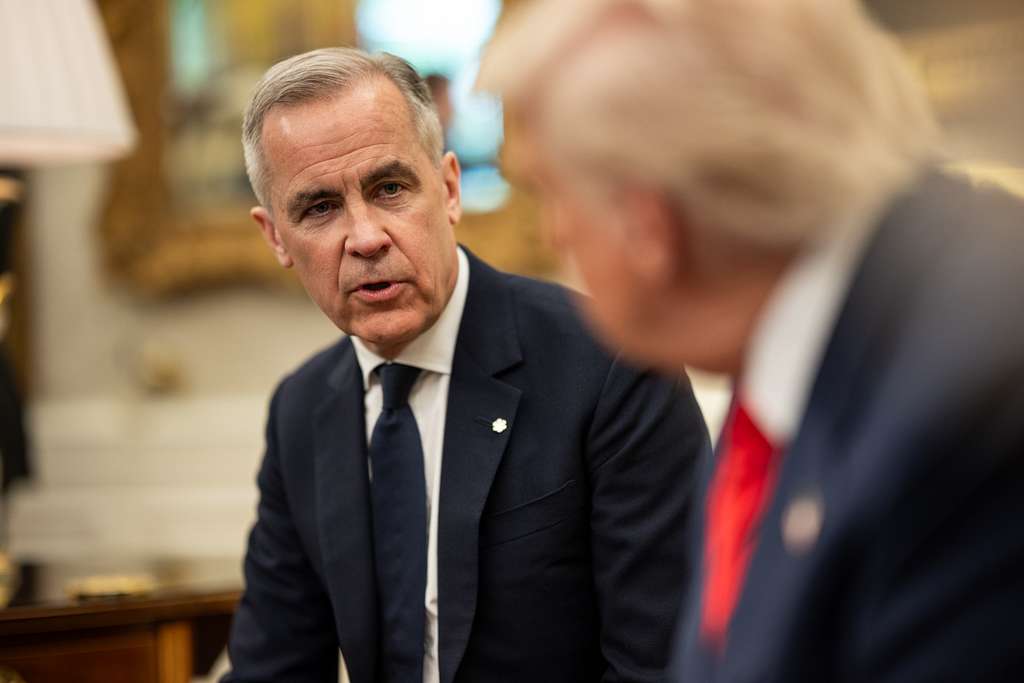
Prime Minister Mark Carney has confirmed that Canadian negotiators are in Washington and that discussions are continuing. On Aug. 6, he described the negotiations as difficult and said he expected further conversations with U.S. President Donald Trump. The Associated Press reported that Canadian officials were in Washington and that the two leaders had spoken the previous week.
The central question is whether the two governments can assemble an interim political agreement before Aug. 19—or at least persuade Trump to delay the new tariffs while negotiations continue.
What tariffs are scheduled to begin Aug. 19?
On July 20, Trump signed three proclamations using Section 338 of the U.S. Tariff Act of 1930.
The provision allows a president to impose additional duties of up to 50 per cent after determining that another country is discriminating against American commerce. Although Section 338 has existed for decades, its deployment in this dispute represents what trade advisers describe as its first significant use in modern trade practice.
The proclamations impose an additional 50-per-cent tariff on approximately US$20 billion—or roughly C$28 billion—of annual Canadian exports. The affected categories extend beyond the three headline disputes involving dairy, alcohol and vehicles and include various chemicals, plastics, electronics, machinery, manufactured products, food, forestry products and consumer goods.
The tariffs are scheduled to apply even where products otherwise qualify for duty-free treatment under CUSMA. Depending on the product, they may be added to ordinary U.S. customs duties.
Products already subject to separate Section 232 national-security tariffs are generally excluded from the new Section 338 duties. Energy, potash, fish, critical minerals and qualifying civil-aircraft products are also excluded.
That means the latest measures are narrower than an across-the-board 50-per-cent tariff on everything Canada sells to the United States. Economists cited by The Associated Press estimate they cover approximately five per cent of Canadian exports to the U.S. and an amount equivalent to roughly 0.8 per cent of Canada’s economy. The AP’s analysis describes the products covered and the important exemptions.
The effect would still be serious for companies concentrated in the targeted industries. A 50-per-cent border tax can erase a product’s competitiveness, force an American importer to increase prices or make a supply relationship commercially unworkable.
U.S. Customs and Border Protection would collect the tariff from the American importer. The economic cost could then be divided among that importer, the Canadian supplier and consumers through reduced margins, renegotiated prices or higher retail costs.
Why American alcohol is at the centre of the negotiations
Canadian provinces began removing American alcohol from government liquor stores in March 2025 as retaliation for Trump’s original tariffs.
Ontario’s LCBO stopped purchasing U.S. products, removed them from its stores and online catalogue, and halted their distribution to many restaurants, bars and other retailers. Quebec, British Columbia and several other provinces adopted similar measures.
Alberta and Saskatchewan later ended their government restrictions, but U.S. products remained excluded from the liquor systems of most other provinces.
The economic effect was unusually direct. Rather than applying a tariff and leaving products available at a higher price, provincial governments used their purchasing and distribution power to cut many American producers out of major Canadian markets.
The White House says Canadian imports of American alcoholic beverages fell sharply after the restrictions began, while alcohol imports from several other countries increased. Its July proclamation argues that U.S. producers were treated less favourably than competitors from Europe, Australia, Chile, Japan and elsewhere. The published proclamation explains the U.S. finding and schedules the additional tariffs for Aug. 19.
Canada’s position is that the restrictions were retaliation for American tariffs—not an ordinary protectionist policy imposed without provocation.
That difference in interpretation is fundamental. Washington describes the liquor measures as discriminatory Canadian trade barriers. Canadian governments describe them as countermeasures adopted only after the United States disrupted a previously tariff-free relationship.
Both descriptions contain part of the factual sequence. The restrictions do discriminate against American alcohol, but they were introduced in direct response to U.S. action.
Alcohol has now become valuable at the negotiating table because it is highly visible, economically painful to particular American producers and relatively easy to reverse if a broader agreement is reached.
Putting bottles back on store shelves requires less structural change than rewriting Canada’s supply-management system or redesigning the North American auto industry.
Can Ottawa actually put U.S. alcohol back on the shelves?
Not by itself.
Provincial governments control liquor distribution and retail policy in most of Canada. Ottawa can negotiate, coordinate and ask premiers to reverse their restrictions, but it cannot simply order the LCBO, Société des alcools du Québec or BC Liquor Stores to resume American purchases.
Carney has repeatedly acknowledged that the final decision rests with the provinces.
That division of authority creates one of the largest practical obstacles in the negotiations. The United States wants a Canadian commitment, but the federal government needs provincial cooperation to deliver it.
The provincial positions are also not identical.
Ontario Premier Doug Ford has previously said American alcohol can return when U.S. tariffs are removed or an acceptable trade agreement is reached. His position leaves room for a negotiated restoration but rejects returning the products as an advance concession.
British Columbia Premier David Eby has been considerably more defiant. After the new tariffs were announced, he said there was “not a chance in hell” American alcohol would return to B.C. shelves. The AP reported Eby’s statement while noting that eight provinces maintained restrictions.
That does not necessarily make a national agreement impossible. Political positions can change if the United States offers substantial tariff relief, and provinces could adopt different implementation schedules. But Washington may be reluctant to accept a federal promise that does not guarantee uniform provincial action.
The likely Canadian formulation would be conditional: provinces restore access only after specified U.S. tariffs are withdrawn, suspended or reduced.
What else is Canada reportedly prepared to offer?
Retaliatory auto tariffs
Canada imposed a 25-per-cent surtax on certain American vehicles after the United States introduced tariffs on Canadian automobiles.
The Trump administration argues that the Canadian measure discriminates specifically against American manufacturers and penalizes companies shifting production into the United States.
Canada is reportedly considering removing or modifying that retaliation as part of an exchange for U.S. tariff relief.
This does not necessarily mean Ottawa is prepared to abandon the Canadian auto sector’s demand for reciprocal treatment. The negotiating question is whether Canada would remove its countermeasure if Washington also reduces its tariffs or provides exemptions for CUSMA-compliant vehicles and components.
Because automobile production crosses the border repeatedly, tariffs can accumulate through a supply chain. Parts manufactured in one country may be installed in another before a completed vehicle crosses the border again. That makes the auto dispute economically larger and structurally more complicated than the alcohol ban.
Dairy quota administration
The United States has long criticized Canada’s supply-management system, which protects dairy farmers through production controls and high tariffs on imports above negotiated quotas.
The immediate U.S. complaint is narrower than eliminating supply management.
Washington argues that Canada allocates its CUSMA cheese tariff-rate quotas differently than equivalent quotas under Canada’s agreement with the European Union. The U.S. says retailers can receive access under the European arrangement but are excluded from the American allocation, placing U.S. exporters at a disadvantage.
A tariff-rate quota permits a specified quantity of imports to enter at a low or zero duty; imports beyond the quota face much higher tariffs.
Canada is reportedly considering changes in this area, but no detailed proposal has been made public. That leaves several possibilities, ranging from administrative adjustments to quota allocation through to expanded market access.
Those are not politically equivalent.
A technical change that gives retailers more access to existing quota volumes may be defensible as implementation of current trade obligations. A significant expansion of duty-free imports would be regarded by Canadian dairy organizations and Quebec political leaders as an attack on supply management.
Any article claiming Canada has agreed to “open its dairy market” would therefore be ahead of the available evidence.
Provincial procurement rules
Some Canadian provinces and public agencies adopted “buy Canadian” or anti-American procurement policies during the tariff dispute.
These measures can prevent U.S. companies from competing for certain public contracts or place them at a disadvantage. Washington is reportedly seeking their removal as part of a wider settlement.
Here again, Ottawa would require provincial cooperation. Procurement is divided among federal, provincial and municipal authorities, and the exact policies under consideration have not been publicly identified.
What Canada wants in return
Canada is not publicly presenting the proposals as unilateral concessions.
The reported objective is a package containing several American commitments:
- Cancellation or suspension of the Section 338 tariffs scheduled for Aug. 19.
- Relief from existing tariffs affecting steel, aluminum, automobiles and possibly other sectors.
- Recognition of continued preferential treatment for products meeting CUSMA origin rules.
- A joint announcement setting out the next stage of CUSMA negotiations.
- A process for resolving future disputes without repeatedly escalating to unilateral tariffs.
The difficult part is the second item.
People familiar with the negotiations have indicated that the United States is not expected to remove every Section 232 tariff. Those duties were imposed under national-security authority and form part of a wider Trump administration policy extending beyond Canada.
Washington may offer reduced rates, quotas, company-specific exclusions or preferential Canadian treatment rather than a return to completely tariff-free trade.
That creates a political problem for Carney. Restoring American alcohol and withdrawing Canadian retaliation will be easier to defend if Canada receives clear, immediate and substantial relief. It will be much harder if the agreement merely prevents the next tariff increase while leaving the most damaging existing measures largely intact.
Why the United States is using Section 338
Trump’s use of Section 338 is significant beyond this particular dispute.
The administration has previously relied heavily on emergency economic powers and Section 232 of the Trade Expansion Act, which concerns imports said to threaten national security. Court challenges and legal uncertainty surrounding some earlier tariff authorities encouraged the administration to identify alternative statutes.
Section 338 specifically addresses alleged discrimination against American commerce. It sets a maximum additional duty of 50 per cent and requires at least 30 days before the tariff takes effect.
The July proclamations were designed around that statutory language. Each identifies a particular Canadian practice—provincial alcohol restrictions, dairy-quota administration or retaliatory auto tariffs—and connects it to a set of Canadian products that will face additional duties.
The proclamations also allow the president to reduce, modify, suspend or terminate the tariffs if he determines that doing so serves the U.S. public interest. That gives the White House a straightforward legal mechanism to pause the measures if negotiations produce progress.
Trade advisers at PwC note that the new tariffs apply regardless of CUSMA status and represent a major departure from the agreement’s preferential framework. Its legal and customs analysis describes Section 338’s mechanics and the affected sectors.
In practical terms, the tariffs have been constructed both as a penalty and as negotiating leverage.
Is this a CUSMA renegotiation or a temporary tariff deal?
It is increasingly both.
CUSMA came into force in 2020 with a required six-year joint review. The three countries were supposed to decide whether to extend the agreement for another 16 years. Failure to agree does not cause the pact to disappear immediately, but it triggers annual reviews and creates the possibility that it will expire in 2036.
The United States did not agree to a straightforward extension during the initial review process. That opened a prolonged period of negotiation and uncertainty.
Canada is reportedly seeking a political agreement that could provide near-term tariff relief without pretending every dispute in CUSMA has been resolved.
Such an arrangement could be announced by the two governments without completing a full treaty amendment requiring a lengthy domestic approval process. It might suspend the Aug. 19 tariffs, set interim tariff levels and commit the parties to continue formal talks in the fall.
That would provide immediate economic relief while postponing the hardest structural issues.
Its weakness would be durability. A political understanding can be changed more easily than a ratified trade agreement. Canadian businesses have already seen tariffs announced, modified and threatened through presidential action, making long-term investment decisions difficult even if a temporary settlement is reached.
What is most likely to happen before Aug. 19?
Three broad outcomes remain possible.
1. An interim agreement or tariff suspension
This appears to be the most plausible negotiated outcome.
Canada could offer conditional movement on alcohol, autos and dairy administration. Trump could suspend the new Section 338 tariffs, announce selected relief and claim that pressure forced Canada to address American complaints.
Both leaders would be able to present the arrangement as a victory. Carney could say Canada protected major export sectors and negotiated reciprocal concessions rather than surrendering. Trump could say tariffs opened markets for American producers.
A suspension rather than permanent cancellation would allow Washington to reimpose the tariffs if it concluded that Canada or the provinces had not fulfilled their commitments.
2. A limited agreement that prevents the new tariffs but leaves existing duties
Canada may succeed in stopping the Aug. 19 measures without securing broad relief for steel, aluminum and autos.
This would reduce the immediate economic danger while leaving the underlying trade conflict unresolved. It could also produce a political backlash if provinces are asked to restore U.S. products while important Canadian industries continue facing American tariffs.
3. No agreement before the deadline
If talks fail, the 50-per-cent duties are scheduled to take effect at 12:01 a.m. Eastern time on Aug. 19.
Canada would then have to decide whether to expand its retaliation, challenge the measures legally, provide new assistance to affected industries or continue negotiating after the tariffs begin.
Further retaliation could increase pressure on American constituencies but would also increase costs in Canada. The dispute has already demonstrated that tariffs and countermeasures can be economically painful without quickly changing political positions.
Will Canadians buy American alcohol if it returns?
Government access and consumer demand are separate questions.
A negotiated agreement could place American bottles back on provincial shelves. It cannot require Canadians to purchase them.
The original alcohol restrictions coincided with a broader consumer boycott involving U.S. food, travel and other products. That sentiment may outlast the official policy, particularly after repeated tariff threats and Trump’s comments about Canadian sovereignty.
American producers would therefore face two stages of recovery: regaining access to provincial distribution systems and rebuilding consumer demand.
Some products—especially well-known bourbon, Tennessee whiskey and California wine brands—would likely recover part of their former sales. Restaurants and bars might also welcome the restoration of products requested by customers.
But Canadian producers and suppliers from Europe, Australia, South America and other markets have occupied shelf space abandoned by U.S. brands. Provincial liquor agencies may not immediately restore the old product mix, and consumers who discovered substitutes may not return.
Removing the ban would reopen the market. It would not automatically restore the market that existed before March 2025.
What to watch next
The most important signals will not be another general declaration that talks are “constructive.” They will be concrete changes in government behaviour.
Watch for:
- A Trump proclamation delaying, suspending or modifying the Aug. 19 tariffs.
- A joint statement specifying which existing U.S. tariffs will be reduced.
- Coordinated announcements from Ontario, Quebec and British Columbia concerning American alcohol.
- Details showing whether dairy changes affect only quota administration or expand import volumes.
- Changes to Canada’s retaliatory auto surtax.
- A firm date and structure for the next stage of CUSMA negotiations.
- Industry exemptions or quota arrangements for steel, aluminum and automotive products.
The absence of detail would matter. A broad political announcement could calm markets temporarily while leaving businesses uncertain about tariff classifications, implementation dates and provincial compliance.
A deal may be close—but the old relationship is not
The return of U.S. alcohol would be politically symbolic, but it would not mean the Canada-U.S. trade relationship had returned to normal.
The dispute now concerns more than tariff rates. It concerns whether CUSMA still provides reliable rules, how much authority an American president can exercise unilaterally and whether Canadian governments should remain as economically dependent on the United States as they were before the tariff war.
Canada appears willing to trade reversible measures—liquor restrictions and retaliatory tariffs—for immediate economic relief. That can be understood as negotiation rather than capitulation, provided the relief is reciprocal and substantial.
The decisive details remain unknown.
Which American tariffs would disappear? Which would merely be reduced? Would all major provinces restore U.S. alcohol? Would Washington accept administrative dairy changes, or demand wider access? And would an interim understanding survive the next dispute?
Until those questions are answered, American alcohol returning to Canadian shelves should be treated as a bargaining proposal, not a completed policy reversal.
The most likely near-term result is not a grand restoration of free trade. It is a narrower political bargain designed to stop the Aug. 19 escalation and keep negotiations alive.
Whether that bargain becomes a stable continental trade framework—or simply the next pause in a continuing tariff war—will depend on what each side actually commits to when the headlines are replaced by legal text.